Introduction
Agriculture is one of the oldest professions known to humanity, and with the passage of time, agricultural techniques have evolved significantly. In the 21st century, the agriculture industry has undergone a radical transformation thanks to technological advancements. From traditional farming to smart agriculture, modern technologies now play a vital role in improving productivity, reducing waste, and increasing resource efficiency. This article discusses how the agriculture industry has changed due to these modern technologies.
1. Precision Agriculture
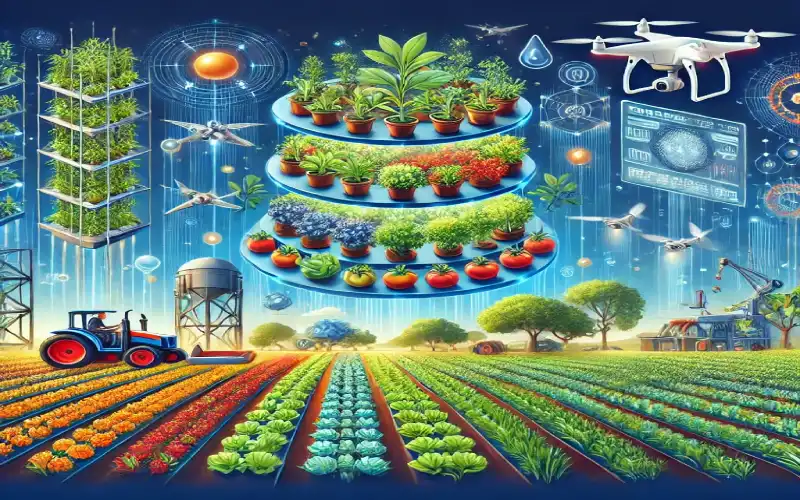
One of the most significant shifts in modern agriculture is the concept of precision agriculture, which relies on the use of data and technology to enhance production efficiency. This technique employs remote sensing systems, Geographic Information Systems (GIS), and drones to collect data about land and crops. By analyzing this data, farmers can identify crop needs more accurately, leading to better use of water, fertilizers, and pesticides.
Benefits of Precision Agriculture:
- Improved Productivity: Data analysis helps make informed decisions, resulting in increased crop yields.
- Cost Reduction: Efficient use of resources reduces operational costs.
- Environmental Protection: Precision agriculture minimizes chemical usage, contributing to environmental conservation.
2. Vertical Farming
Vertical farming is one of the innovative solutions that have emerged in recent years, especially in urban areas. It utilizes vertical space to grow crops using hydroponic or aquaponic systems. These systems can be implemented in greenhouses or even within buildings.
Benefits of Vertical Farming:
- Space Efficiency: Vertical farming is ideal for limited spaces, allowing crops to be grown in unconventional areas.
- Enhanced Crop Quality: These systems provide a precisely controlled environment, leading to improved crop quality.
- Waste Reduction: By controlling environmental conditions, waste due to weather-related factors is minimized.
3. Agricultural Robotics
Robotics have increasingly entered the agricultural sector, performing various tasks from planting to harvesting. The use of robots enhances efficiency and reduces reliance on human labor.
Benefits of Agricultural Robotics:
- Increased Efficiency: Robots can work around the clock without fatigue, increasing production efficiency.
- Cost Reduction: In the long run, robots can lower labor costs.
- Precision Work: Robots can perform tasks with high accuracy, minimizing errors.
4. Big Data Utilization
Big data has become a powerful tool in modern agriculture, as vast amounts of data related to crops, weather, and soil can be collected and analyzed. This data helps farmers make better agricultural decisions.
Benefits of Using Big Data:
- Improved Forecasting: Data analysis aids in predicting weather changes and determining the best times for planting and harvesting.
- Resource Allocation: Farmers can allocate resources based on precise data, enhancing production efficiency.
- Increased Sustainability: By effectively using data, waste can be reduced, and resources can be preserved.
5. Organic Farming
With the growing demand for organic products, organic farming has become more prevalent. These practices focus on using natural fertilizers and alternatives to pesticides, contributing to a reduction in environmental impact.
Benefits of Organic Farming:
- Improved Soil Health: Natural fertilizers help enhance soil quality and increase its fertility.
- Market Demand Satisfaction: With rising health awareness, the demand for organic products is increasing, providing new opportunities for farmers.
- Biodiversity Promotion: Organic farming practices contribute to the preservation of biodiversity by avoiding harmful chemicals.
6. Sustainable Agriculture
Sustainable agriculture is an integrated approach that combines traditional and modern methods to achieve sustainable agricultural production. These practices focus on resource conservation, pollution reduction, and biodiversity enhancement.
Benefits of Sustainable Agriculture:
- Natural Resource Protection: Sustainable agriculture aims to use resources efficiently to preserve them for future generations.
- Biodiversity Enhancement: It promotes biodiversity through diverse techniques and natural farming processes.
- Food Security Provision: It contributes to increasing food production in a sustainable manner.
Conclusion
The agriculture industry has undergone a profound transformation in the 21st century due to modern technologies. From precision agriculture to the use of robotics and big data, farming has become more efficient and sustainable. As innovation and development continue in this field, we can expect a more sustainable agricultural future that adapts to global challenges. Modern agricultural technologies not only enhance productivity but also contribute to environmental protection and ensure food security for future generations.